

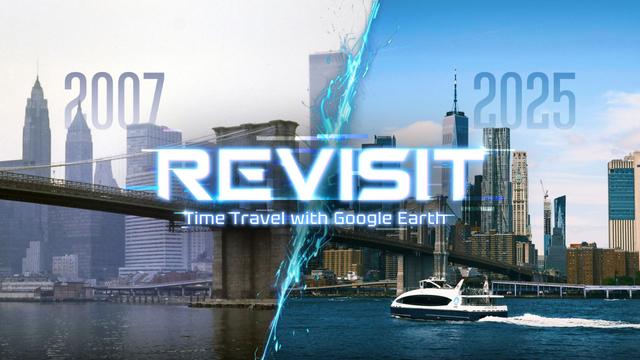
Some VR apps chase spectacle. Others chase comfort. Revisit aims for something sneakier: a feeling you can't get from a PC monitor, even with a 4K map on the biggest screen in your house. This is a VR Travel / Relax / Tourism-leaning experience on Meta Quest that leans into Google Earth-style exploration and the quiet thrill of "time travel" through familiar streets and landmarks - without packing a bag.
In store terms, its positioning is clear from the keywords people naturally search for: VR Travel, relaxation, tourism, VR Paris, VR London, and that "I just want to wander" mood. In product terms, it's the kind of small-but-refined app you open for ten minutes and accidentally keep running for an hour, because your brain keeps saying, "Just one more corner."
On Meta Quest, the app is called Revisit. If you've ever wished the internet's map imagery felt less like a tool and more like a place, this is the pitch: let VR do what it does best - turn looking into being there.
A Pocket-Sized Holiday Escape That Still Feels Like a Journey
Revisit's vibe is not "theme park ride." It's closer to stepping into a quiet observation deck where the world waits for you. In its own positioning, it reads like a small and beautiful product - compact in scope, but intentional in presentation. It even leaned into a budget-friendly moment during a holiday sale, offered at $2.99 (pricing and promotions can change over time, but the point is the same: it has been positioned as accessible).
This matters because "VR travel" isn't one feature. It's a bundle of expectations: you want to get in quickly, you want the controls to be obvious, and you want the environment to feel like it respects your comfort. A travel app that makes you fight menus is like an airport that hides the gates. Revisit's promise is the opposite - get out of your way, let you look.
lives in that first impression: the sense that the app is designed for ease, not for bragging rights. You don't need to "learn a game." You need the app to behave like a good guide - present, but not loud.
When "Time Travel" Isn't Sci-Fi, It's Memory with Better Lighting
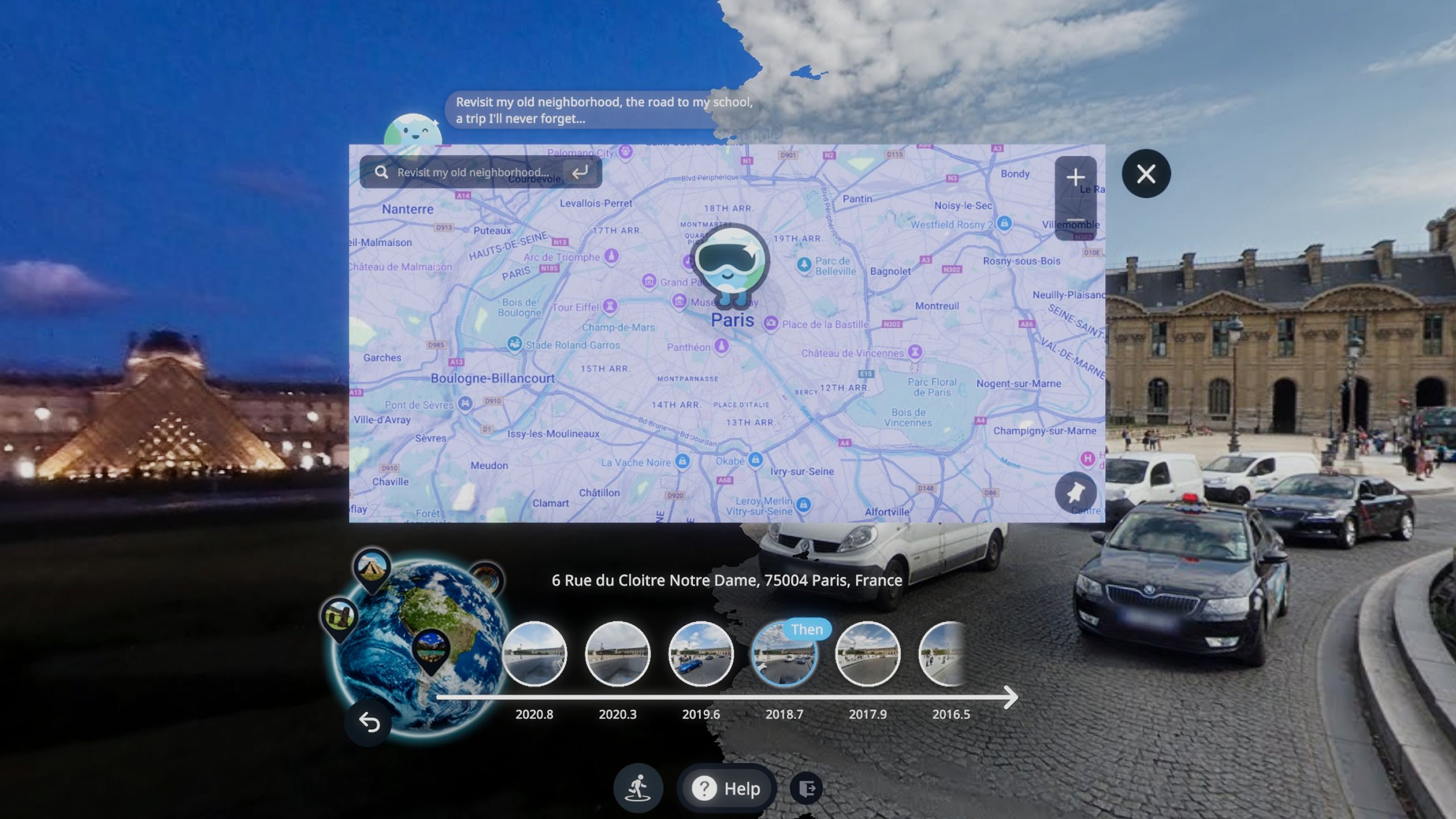
"Time travel" in VR exploration apps usually means navigating between different imagery captures of the same location - an idea many people already understand from map platforms, but rarely feel. VR changes the emotional texture. A shift of year isn't just a slider; it becomes a before-and-after you experience at human scale, with your head and hands doing the remembering.
That's why the app's second keyword cluster - Google, Google Earth, Time Travel, Nostalgia - fits. The experience isn't only about sightseeing. It's about comparison. The cafe that used to be there. The bridge that got rebuilt. The skyline that suddenly feels newer than your own mental picture.
is the moment that comparison clicks: when you realize you're not just "seeing a place," you're watching change. In VR, change feels personal, because it plays out at your own eye level - no mouse wheel, no tab switching, no distraction.
Comfort First: Why VR Travel Needs Different Design Than Flat Screens
VR travel sounds simple: put a map in a headset. In practice, it's a specialized design problem. Visual exploration in head-mounted displays lives or dies on comfort: how fast you move, how the app handles rotation, how readable text is at typical Quest viewing distances, and whether the interface stays stable while your head is doing micro-movements.
Even without over-promising specifics, you can evaluate travel apps by the questions they implicitly answer:
- Can you explore without nausea? Good VR navigation usually avoids forced acceleration and gives the user control over pace.
- Is the UI "headset-native"? Buttons need to be readable and hitable with VR controllers, not designed like mobile app widgets.
- Does the experience reward slow looking? A travel app should feel good at rest, not only while moving.
Revisit's "relax" angle isn't fluff - it's a product requirement. The most useful travel apps in VR understand that many players aren't chasing thrills; they're chasing a gentle, low-effort mental reset. belongs here: an emphasis on calm exploration, where the best moments happen when you stop moving and simply notice details.
Real Use, Real Value: A Trip-Planning Scenario That Actually Makes Sense
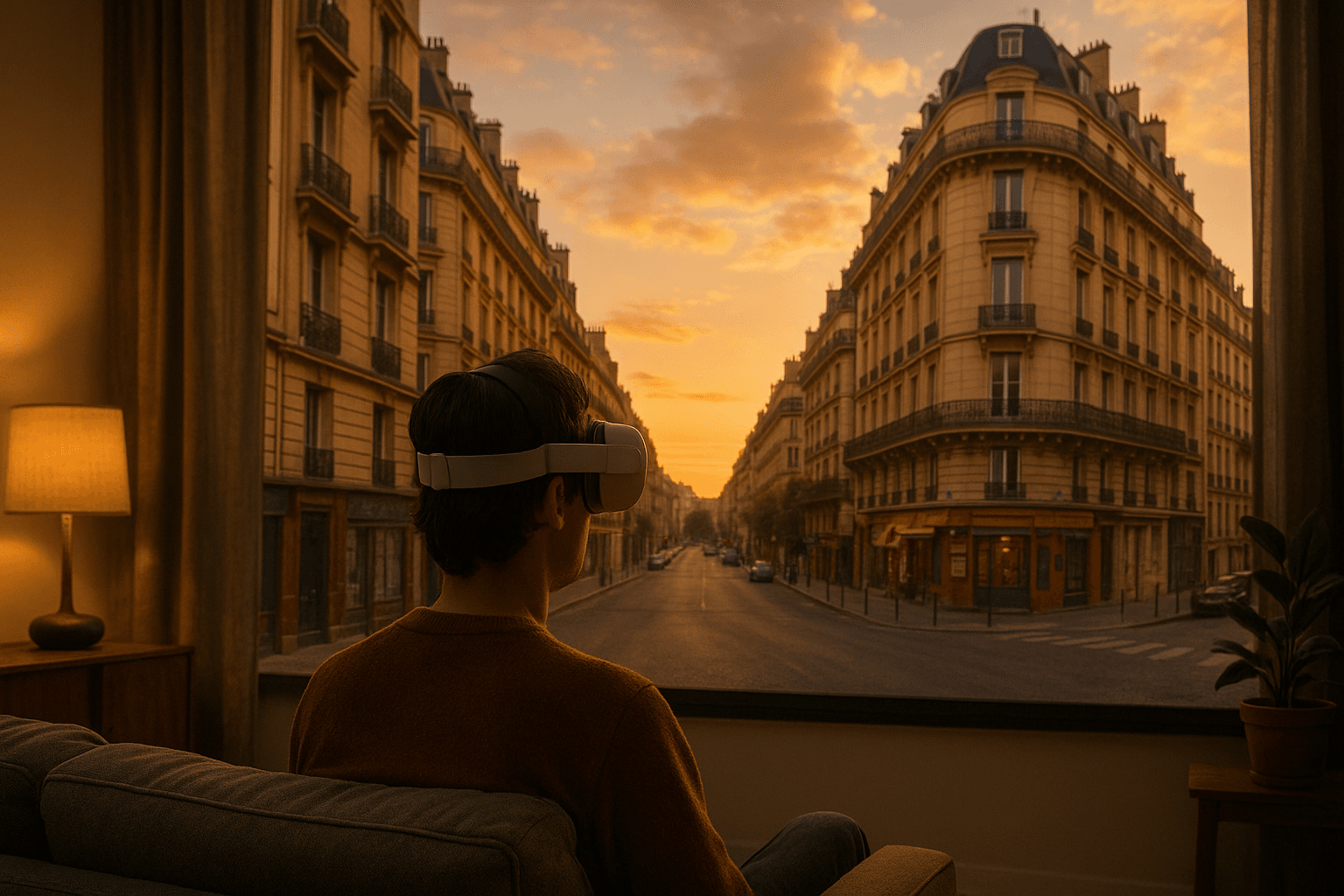
Here's a grounded, real-world use scenario that doesn't rely on fantasy promises. Imagine you're traveling soon - say, London or Paris are on the list, because those are common "VR city" destinations people search for. You want to preview neighborhoods, understand how streets connect, and build that "mental map" so you don't spend your first day staring at your phone.
In a conventional setup, you bounce between tabs, zoom in and out, and maybe drop into street imagery briefly. In VR, the same task becomes more spatial and less frantic: you can orient by turning your head, you can linger at intersections, and you can get a stronger sense of distance and layout than a flat display tends to provide.
This is where VR can surpass PC - not by being "higher resolution," but by being a better simulator of attention. You're not multitasking. You're not doomscrolling. You're present. is the practical payoff: the app can help you feel prepared for a real trip, or simply satisfy curiosity when travel isn't possible.
What "Immersive Tourism" Means on Quest: Presence, Scale, and the Joy of Slow Discovery
Meta Quest is a particularly natural home for this kind of app, because it's frictionless compared to tethered VR: you can pick it up, put it on, and be somewhere else in seconds. That immediacy is a competitive advantage for tourism-style experiences. The less setup you need, the more the app gets used in tiny moments - after dinner, between meetings, late at night when you want something gentle but engaging.
There's also a subtle VR trick that travel apps benefit from: scale. A cathedral, a wide boulevard, a dense alley - these feel different when your body is the camera. Even if the content originates from familiar online imagery, the headset changes the way your brain treats it. VR doesn't just show information; it changes your relationship to it.
is the emotional layer: the "nostalgia" keyword isn't just marketing. When you explore places you've lived, visited, or dreamed about, you're not only touring geography - you're touring versions of yourself. That's the kind of engagement that keeps an app installed.
Trust, Transparency, and the Boring Stuff You Actually Should Care About
Travel apps can feel harmless, but they still touch sensitive areas: platform permissions, account access, and the user's expectations around privacy. On Meta Quest, distribution through the official store typically means you're operating within Meta's platform rules, purchase protections, and security standards - important guardrails compared to unknown sideloaded sources. It doesn't automatically answer every privacy question, but it raises the baseline of trust for many users.
It's also worth being clear about what doesn't apply. Metrics like RTP, volatility, paylines, or "max win" are gambling concepts; they're not relevant to a tourism-style VR exploration app. If you ever see unofficial pages trying to force those labels onto a non-casino product, treat that as a red flag for misinformation. When a technical detail isn't published by the storefront or the developer, the trustworthy move is simple: don't guess.
is your checklist mindset: keep your headset updated, download from trusted storefronts, and treat any permission prompts with the same caution you'd use on a phone. In other words: enjoy the wonder, but keep your common sense turned on.
FAQ: Quick Answers for Curious Explorers
Q: What kind of app is Revisit?
A: Based on its positioning and keywords, it's a VR travel/relaxation/tourism-style exploration app for Meta Quest that leans into Google Earth-style world viewing and "time travel" comparison between different captures of a location.
Q: Does it let me "travel" to specific cities like London or Paris?
A: Those destinations appear in the app's keyword context (for example, "VR London" and "VR Paris"), which suggests that city exploration is a core user intent. Exact location availability and how deep the coverage feels can vary depending on how imagery is surfaced in-app.
Q: Is it complicated to use?
A: The app is described as small-but-refined, and its category implies a comfort-forward, low-friction experience. In VR travel apps, that typically means straightforward navigation and an interface designed for controllers rather than a mouse.
Q: What about pricing?
A: It has been offered at $2.99 during a holiday sale. Store pricing and sale timing can change, so check the Meta Quest listing for the current price.
Q: Does it support crypto fairness or betting transparency features like Provably Fair?
A: Those mechanisms are designed for gambling and crypto wagering products. For a tourism-style VR exploration app, the more relevant trust factors are store distribution, permission transparency, and clear product behavior.
Q: Who is this best for?
A: Anyone who wants the feeling of travel without the logistics: armchair tourists, trip planners, nostalgia-driven explorers, and VR users who prefer calm discovery over adrenaline gameplay.
FAQ is really just this: if your favorite VR moments are the quiet ones - the ones where you forget you're wearing a headset - Revisit is built to create exactly that kind of pause.